The short answer
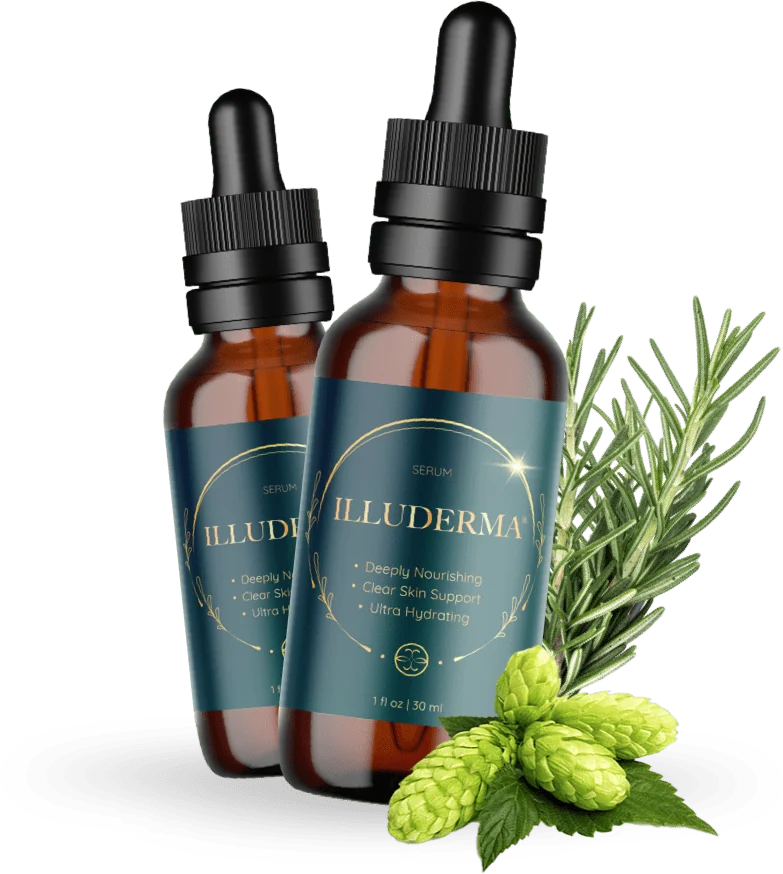
IlluDerma is a plant-based facial serum that its maker says clears dark spots. Of the five over-the-counter ingredients the American Academy of Dermatology names for fading dark spots, it lists one, vitamin C, at an undisclosed amount. Its hydrating and soothing ingredients may improve how skin looks, but expect slow, modest change, and pair it with a daily tinted sunscreen, which matters more.
Key points
- A serum with about 16 plant and vitamin ingredients, applied morning and night.
- Only vitamin C overlaps with the dermatology-recommended list for fading spots; no azelaic, glycolic or kojic acid or retinoid is listed.
- The maker's claim that dark spots are caused by 'blue modern radiation' and not by aging oversimplifies the science.
- $49 to $69 per bottle depending on package; one bottle is a 30-day supply.
- 60-day money-back guarantee that, according to the maker, requires returning all bottles, including empty ones.
IlluDerma is sold as a natural answer to dark spots, with a sales page built around a striking idea: that spots are caused by “blue modern radiation” rather than age. This review checks that idea, goes through the ingredient list against what dermatologists actually recommend for fading spots, and lays out the real cost and refund terms.
IlluDerma at a glance
| What it is | A facial serum with plant extracts, oils and vitamins |
| Maker’s claim | Clears dark spots and protects against “modern blue radiation” |
| Ingredient count | About 16, according to the maker |
| Dermatology-listed spot faders included | 1 of 5 (vitamin C) |
| Price | $49 to $69 per bottle, depending on package (November 19, 2026) |
| Supply | 30 days per bottle |
| Guarantee | 60 days; return all bottles, including empty ones |
| Reasonable for | Dry, dull-looking skin; a gentle addition to a sunscreen routine |
| Not the best choice for | Melasma, stubborn or deep spots |
The claim: are dark spots caused by blue light?
The sales page says new research proves dark spots “are NOT a sign of aging” and are caused by “blue modern radiation that oxidizes the skin.”1
There is a grain of truth in it. A 2010 study found that visible light, which includes blue light, darkened pigment in people with medium to dark skin, and that this pigment was darker and longer-lasting than pigment from long-wave UVA. But the same exposure caused no pigmentation in light skin.3
What the claim leaves out is everything else. The American Academy of Dermatology (AAD) lists healed acne and rashes, injuries, irritating products, certain medicines, hormonal changes and sunlight as common causes of dark spots.2 The practical takeaway is the opposite of the sales pitch: the best protection against visible light is not a serum but a tinted sunscreen containing iron oxide, which the AAD recommends specifically for dark spots.2
What is in IlluDerma?
The maker groups its ingredients in pairs and describes each. Here they are with a plain note on what each is known for.1
| Ingredient (maker’s grouping) | What the maker says | What it is generally used for |
|---|---|---|
| Graveolens and hyaluronic acid | Skin-calming; hydrating and softening | Hyaluronic acid is a well-established hydrator |
| Aloe barbadensis | Natural and organic; nutrient retention | Soothing and moisturizing |
| Sencha (green tea) | Improves elasticity; rejuvenator | An antioxidant plant extract |
| Witch hazel and horsetail | Gentle astringents; “protects against radiation” | Witch hazel is an astringent and can be drying |
| Jojoba oil | Natural moisturizer | A light, skin-friendly oil |
| Gotu kola | Brightens skin tone; smooths fine lines | A plant extract used in soothing skin care |
| Sage and vitamin C | Strengthens skin; seals in moisture | Vitamin C has evidence for reducing pigment |
| Hops and vitamin E | Antioxidants; reduce redness | Antioxidants |
| Rosemary | Antioxidant; “shrinks pores” | An aromatic plant extract |
| Lemon peel and Scots pine | “Reduces hyperpigmentation”; “radiation protection” | Fragrant plant extracts |
Compared with what dermatologists recommend
The AAD names five over-the-counter ingredients that can fade existing dark spots: azelaic acid, glycolic acid, kojic acid, a retinoid and vitamin C.2 IlluDerma lists only one of them, vitamin C.
A dermatology review describes vitamin C as an antioxidant that “decreases melanin formation,” but also notes that clinical studies of topical vitamin C products remain limited and that the main challenge is keeping it stable and getting it into the skin.4 IlluDerma does not state its vitamin C concentration or form.
A note for sensitive skin
Several of the plant ingredients, such as witch hazel, rosemary, lemon peel and Scots pine, are fragrant or astringent. The AAD warns that a product that irritates your skin can itself cause dark spots, and suggests products labeled for sensitive skin or fragrance-free.2 If your spots came from irritation, a patch test is especially important.
What the maker does not tell you
- No amounts for any of its ingredients.
- No study of the finished serum. The claims rest on ingredient descriptions.
- No sun protection. Despite the “radiation protection” wording, IlluDerma is not described as a sunscreen and lists no SPF. Daily sunscreen is still essential.
How much does IlluDerma cost?
Prices on the official page on November 19, 2026. They can change.
| Package | Supply | Total | Per bottle | Shipping (U.S.) |
|---|---|---|---|---|
| 1 bottle | 30 days | $69 | $69 | Free |
| 3 bottles | 90 days | $177 | $59 | Free |
| 6 bottles | 180 days | $294 | $49 | Free |
Shipping to Canada, the UK and Ireland, and Australia and New Zealand is $15.95, according to the maker. The 3- and 6-bottle packages add two bonus ebooks.
Read the refund terms before you buy. The maker’s 60-day guarantee asks you to send back all bottles, “even the empty ones.” Ordinary dark spots usually take 6 to 12 months to fade even when the cause is removed,2 so judge the serum on texture and overall brightness within 60 days, not on whether the spots have gone.
How to use it, if you buy it
The maker recommends applying it morning and night after cleansing, and says it can be used on the neck, chest and hands. To give it its best chance:
- Patch test on the inner arm for a few days.
- Morning: serum, then a broad-spectrum SPF 30+ tinted sunscreen with iron oxide.
- Do not stack it with several other new actives at once; irritation can create new spots.
- Photograph the same spots every two weeks in the same light.
Who should consider it, and who should not
It may suit you if:
- your skin is dry or dull and you want a gentle, hydrating serum;
- your spots are mild and you already wear sunscreen every day;
- you prefer plant-based formulas and accept slower, modest change.
Look elsewhere if:
- you have melasma. The AAD says it needs strict sun protection and usually prescription creams, sometimes procedures;5
- your spots are deep, slate-gray or have lasted for years;
- you want the ingredients with the strongest evidence; a product built on azelaic acid or a retinoid is a better fit;
- your skin reacts to fragrant plant extracts.
And if any spot is changing, irregular or multi-colored, see a dermatologist before treating it.
The bottom line
IlluDerma is a hydrating, plant-heavy serum wrapped in a dramatic explanation of dark spots. The science behind its headline claim is partly real for darker skin and missing the bigger picture for everyone. Its formula lists only one of the five ingredients dermatologists point to for fading spots, at an unknown strength. It can be a pleasant addition to a routine, but the most effective steps for dark spots are in our dark spots guide: remove the trigger, wear tinted sunscreen every day, and use a proven fading ingredient.
Common questions
What is IlluDerma?
IlluDerma is a facial serum sold by its maker for dark spots. It contains plant extracts and oils such as aloe, green tea (sencha), witch hazel, gotu kola, rosemary, hops, jojoba oil, lemon peel and Scots pine, plus hyaluronic acid and vitamins C and E, according to the maker.
Does IlluDerma work on dark spots?
There is no published trial of IlluDerma. Its vitamin C has evidence for reducing pigment, but the maker does not disclose the amount, and most of its other ingredients are hydrating or soothing rather than proven pigment-faders. It may help skin look smoother and brighter; for fading spots, ingredients such as azelaic acid or a retinoid have stronger backing.
Is blue light really what causes dark spots?
Partly, for some people. A 2010 study found visible light darkened pigment in medium and dark skin, more than long-wave UVA, but not in light skin. Sunlight, acne, irritation, hormones and medicines are also well-established causes. Calling dark spots unrelated to sun or age is not accurate.
How do you use IlluDerma?
The maker recommends applying it in the morning and before bed after cleansing, and says it can also be used on the neck, chest and hands. In the morning, follow it with a broad-spectrum tinted sunscreen.
How much does IlluDerma cost?
On November 19, 2026, the maker listed 1 bottle for $69, 3 bottles for $177 and 6 bottles for $294, with free U.S. shipping and $15.95 shipping to Canada, the UK and Ireland, and Australia and New Zealand.
How does the IlluDerma refund work?
The maker offers a 60-day money-back guarantee and says you must send back all the bottles, even empty ones, to receive a refund. Keep the bottles and your order details until the 60 days are up.
Sources
- IlluDerma official product page (maker's ingredient list, claims, pricing, guarantee and FAQ), read November 19, 2026
- American Academy of Dermatology: How to fade dark spots in darker skin tones
- Mahmoud BH, et al. Impact of long-wavelength UVA and visible light on melanocompetent skin. J Invest Dermatol. 2010;130(8):2092-2097
- Al-Niaimi F, Chiang NYZ. Topical Vitamin C and the Skin: Mechanisms of Action and Clinical Applications. J Clin Aesthet Dermatol. 2017;10(7):14-17
- American Academy of Dermatology: Melasma diagnosis and treatment
This guide is for general information and is not medical advice. See a dermatologist or doctor for a diagnosis or before starting a treatment.