The short answer
There is real research linking the gut and the skin, but the clinical evidence for probiotics is still small. A 2025 review of double-blind trials found that oral probiotics may modestly reduce inflammatory acne, with low-to-moderate certainty, as an add-on rather than a replacement for proven acne treatment. Diet has more practical evidence: small studies link a low-glycemic diet with fewer breakouts, and cow's milk with more acne in some people.
Key points
- The 'gut-skin axis' is an active research area; most evidence comes from small or laboratory studies.
- A 2025 meta-analysis of 3 double-blind trials (231 people) found a modest drop in inflammatory acne with oral probiotics.
- Effects depend on the specific strain; a result for one strain does not transfer to another product.
- Low-glycemic eating and limiting cow's milk have the most practical evidence for acne among diet changes.
- Probiotics carry more risk for people who are seriously ill or immunocompromised.
“Fix your gut, fix your skin” has become one of the most popular ideas in wellness, and an entire category of supplements is built on it. The science behind it is genuinely interesting, and genuinely early. This guide separates what clinical trials have actually shown from what is still a hypothesis, and puts the most practical, evidence-backed steps first.
What is the gut-skin axis?
The “gut-skin axis” is the idea that the bacteria living in your digestive tract can influence your skin, mainly through inflammation, the immune system and oxidative stress. A 2023 review describes growing evidence that “intestinal microbiota homeostasis can influence skin health,” and proposes probiotics as “potential management tools” for skin problems.3
Notice the language: can influence, potential. Much of this research comes from laboratory and animal studies or small human trials. It is a reason to take the idea seriously, not proof that a gut supplement will clear your skin.
The skin has a microbiome too
It is easy to forget that the skin has its own bacteria. A 2025 systematic review of acne and the skin microbiome identified C. acnes, S. aureus and S. epidermidis as key players, and found that standard acne treatments such as benzoyl peroxide already work partly by changing the skin’s bacteria.4 In other words, the proven acne treatments are microbiome treatments too.
Do probiotics help acne? What the trials show
The best summary so far
A 2025 meta-analysis pooled every double-blind randomized trial of oral probiotics for acne that met its quality bar. It found only three trials with 231 people. Together they showed:1
- a modest reduction in inflammatory acne lesions with probiotics;
- substantial differences between trials, and a prediction range that included no meaningful effect in future studies;
- good short-term tolerability, with no serious side effects;
- overall certainty of evidence rated low to moderate.
The authors concluded that probiotics “may modestly reduce acne severity” as an “antibiotic-sparing adjunct,” and that larger trials are needed “before firm clinical recommendations can be made.”
One strain, studied closely
A small 2016 trial gave 20 adults with acne either a liquid probiotic containing Lactobacillus rhamnosus SP1 or a placebo for 12 weeks. People taking the probiotic were far more likely to be rated as improved by physicians, and skin biopsies showed changes in genes linked to insulin signalling.2 It is a promising result, but from only ten people per group, and it applies to that strain, not to probiotics in general.
What this means for you
| Question | Honest answer |
|---|---|
| Can a probiotic replace acne treatment? | No; evidence supports it at most as an add-on |
| How big is the effect? | Modest, on average, in small trials |
| Does any probiotic work? | Effects are strain-specific; results do not transfer between products |
| How long to try it? | The trials ran about 12 weeks |
| Is it safe for healthy adults? | Generally well tolerated in the trials |
Diet: the gut-skin link with more practical evidence
If you want to act on the gut-skin idea, food choices have more practical evidence than supplements. The American Academy of Dermatology (AAD) summarizes the research:5
A low-glycemic diet may mean fewer breakouts
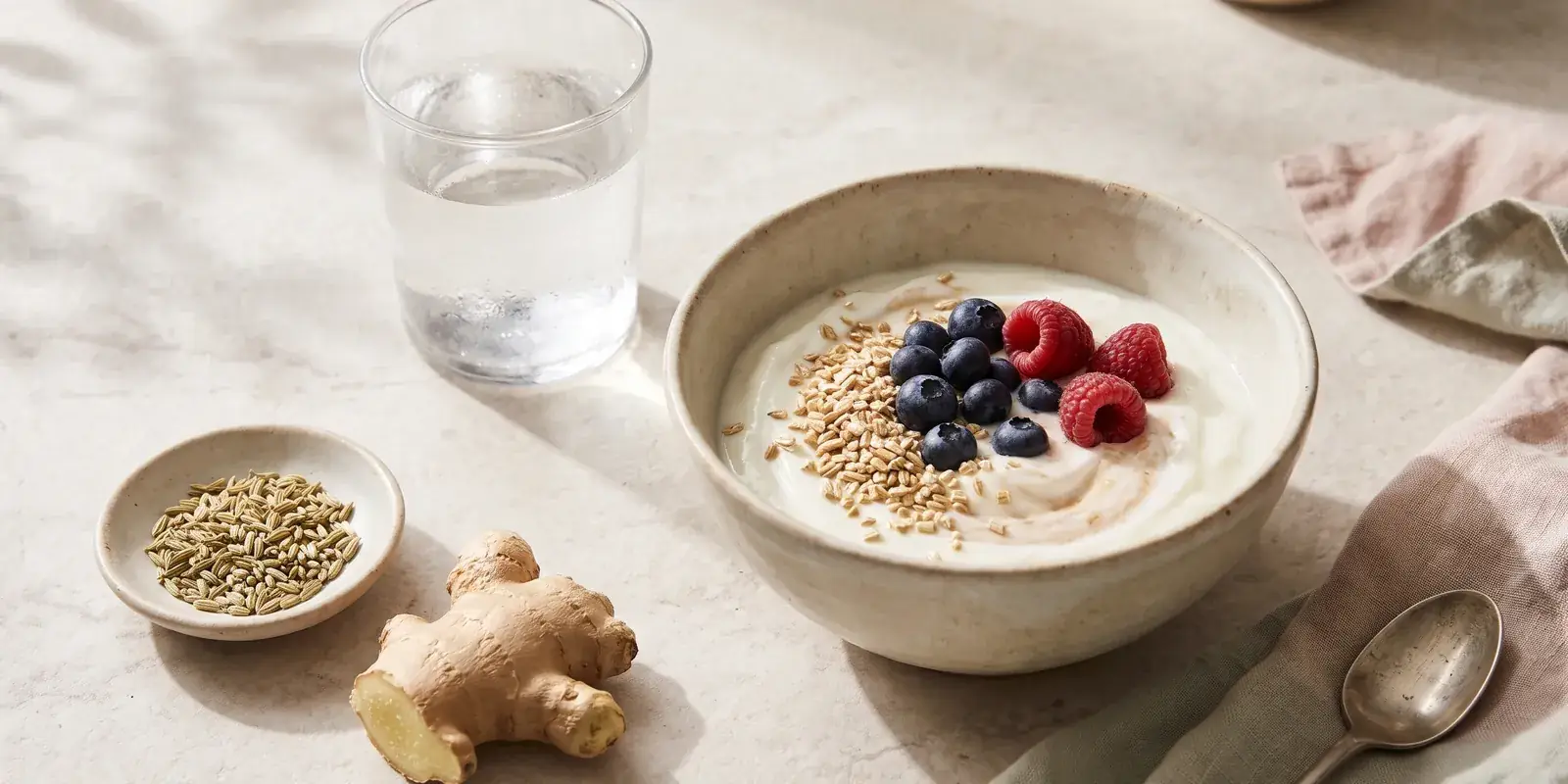
High-glycemic foods raise blood sugar quickly: white bread, corn flakes, puffed rice, potato chips, white potatoes and fries, pastries, white rice and sugary drinks. Small studies in the U.S., Australia and Korea found that people who switched to a low-glycemic diet, based on most fresh vegetables, some fresh fruits, beans and steel-cut oats, had less acne. In a 12-week Australian trial of 43 young men, the low-glycemic group had significantly less acne than those on their normal diet.
The AAD adds a fair caveat: other studies have not found a connection, and more research is needed.
Cow’s milk may play a part for some people
Several studies link cow’s milk, whole, low-fat and skim, with more acne. In one large study of over 47,000 women, those who drank two or more glasses of skim milk a day in high school were 44% more likely to have had acne. Importantly, no studies have found that yogurt or cheese increase breakouts.
A practical eating pattern
- Swap white bread, white rice and sugary drinks for whole grains, beans and steel-cut oats.
- Fill half your plate with vegetables.
- If you drink a lot of cow’s milk and have stubborn acne, try reducing it for 8 to 12 weeks and watch what happens.
- Keep fermented foods such as yogurt if you enjoy them; they are not linked to more acne.
How to choose a probiotic supplement, if you want to try one
The NIH’s National Center for Complementary and Integrative Health (NCCIH) offers useful guidance on probiotics in general:6
- Different types have different effects. The most common are Lactobacillus and Bifidobacterium, but effects depend on the exact strain.
- Most are sold as dietary supplements, which do not need FDA approval before they are marketed. Labels may describe effects on the body’s structure or function, but cannot claim to treat or prevent a disease without FDA consent.
- Labels are not always accurate: some products have contained microorganisms not listed on the label.
A short checklist:
- Does the label name the exact strain (genus, species and strain code), not just “probiotic blend”?
- Does it state the amount in CFU?
- Has that strain, or the product, been tested for skin in a published trial?
- Is the maker clear about what the product does not do?
A product that lists a “proprietary blend” without strains or doses makes it impossible to compare with the research above.
Who should be careful
The NCCIH notes that the risk of harmful effects from probiotics is greater in people with severe illnesses or weakened immune systems, and that severe or fatal infections have been reported in premature infants given probiotics.6 Talk to your doctor before starting a probiotic if you have a serious health condition, are immunocompromised, or are pregnant or breastfeeding, and do not use probiotics as a reason to delay seeing a doctor about a health problem.
When to see a dermatologist
See a dermatologist if your acne is painful, leaves dark marks or scars, or has not improved after two to three months of consistent care. For the dark marks that breakouts can leave behind, see our dark spots guide. Effective prescription treatments exist, and a dermatologist can combine them with diet changes or a probiotic if you want to try one.
Where gut-and-skin supplements fit
Supplements that combine a probiotic with prebiotic fiber and herbs are a fast-growing category. If you choose one, judge it against the checklist above and give it about 12 weeks alongside, not instead of, proven skin care.
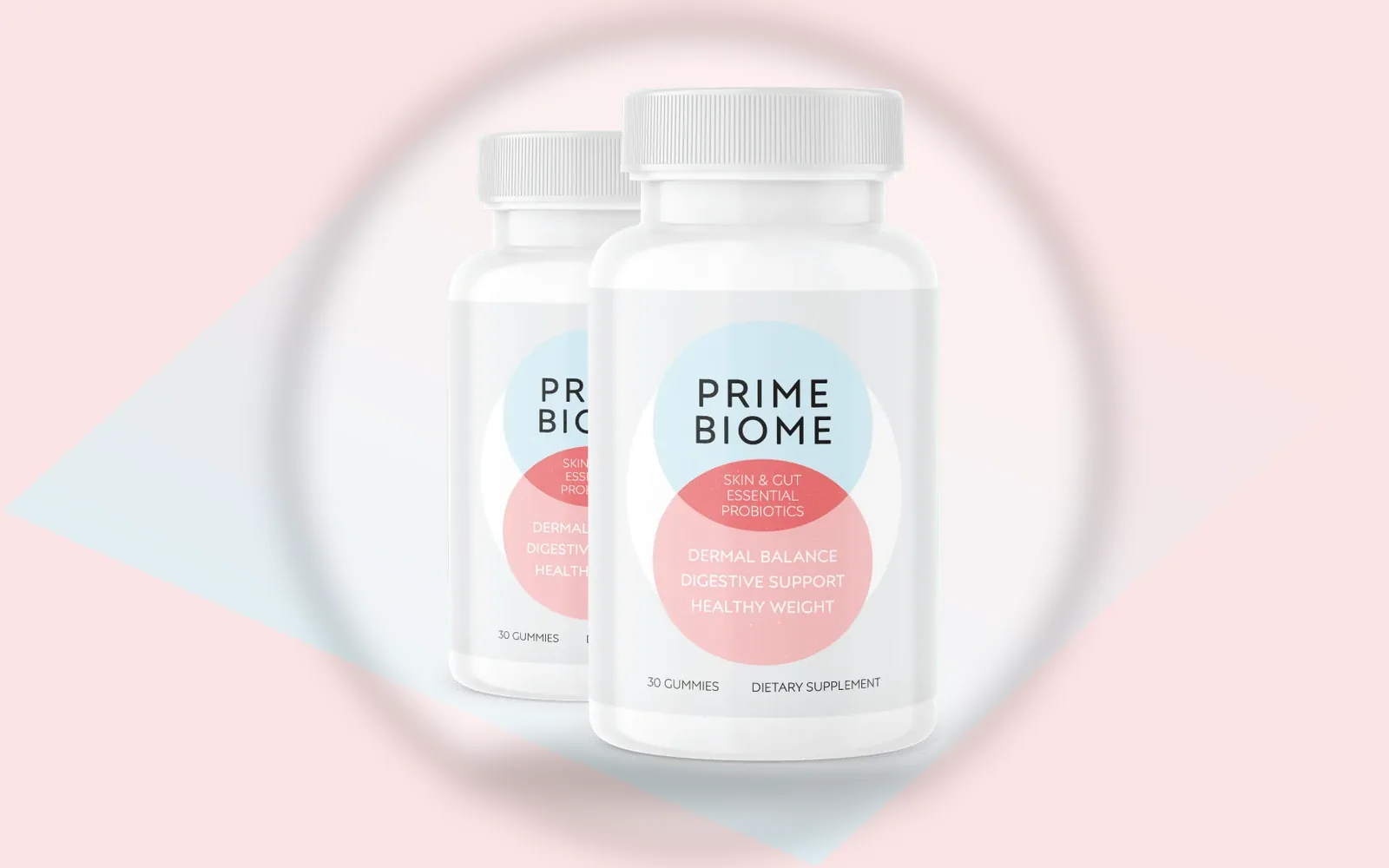
One widely marketed product in this category is reviewed in our PrimeBiome review, which checks its ingredients and claims against the research in this guide.
Common questions
Can gut health cause acne?
Gut health is one of several factors researchers are studying. Reviews describe a gut-skin axis in which gut bacteria may influence inflammation and skin health, but acne is mainly driven by oil production, clogged pores, skin bacteria and inflammation. There is no good evidence that gut problems alone cause acne.
Do probiotics help acne?
They may help a little, alongside standard treatment. A 2025 meta-analysis of three double-blind trials with 231 people found a modest reduction in inflammatory acne lesions with oral probiotics, but the authors rated the certainty low to moderate and said larger trials are needed.
What is the best probiotic for skin?
There is no proven best one. Effects are strain-specific, so look for products that name the exact strain and dose, ideally one that has been tested for skin. For example, Lactobacillus rhamnosus SP1 improved adult acne in a small 20-person trial.
How long do probiotics take to work on skin?
The trials that measured skin changes ran for about 12 weeks. Expect to wait at least two to three months before judging any effect on acne or skin quality.
What foods are good for clear skin?
According to the American Academy of Dermatology, small studies suggest a low-glycemic diet, built on vegetables, beans, some fresh fruit and steel-cut oats, may lead to fewer breakouts. Some studies link cow's milk with more acne, while no studies have found that yogurt or cheese increases breakouts.
Are probiotics safe?
For healthy people they are generally well tolerated, but the NIH notes that safety has not been studied in detail and that risks are higher for people with severe illnesses or weakened immune systems. Some products have contained microorganisms not listed on the label.
Sources
- Tjiu JW, Lu CF. Oral Probiotics in Acne Vulgaris: A Systematic Review and Meta-Analysis of Double-Blind Randomized Clinical Trials. Medicina. 2025;61(12):2152
- Fabbrocini G, et al. Supplementation with Lactobacillus rhamnosus SP1 improves adult acne. Benef Microbes. 2016;7(5):625-630
- Gao T, et al. The Role of Probiotics in Skin Health and Related Gut-Skin Axis: A Review. Nutrients. 2023;15(14):3123
- Podwojniak A, et al. Acne and the cutaneous microbiome: a systematic review. J Eur Acad Dermatol Venereol. 2025;39(4):793-805
- American Academy of Dermatology: Can the right diet get rid of acne?
- National Center for Complementary and Integrative Health (NIH): Probiotics, what you need to know
This guide is for general information and is not medical advice. See a dermatologist or doctor for a diagnosis or before starting a treatment.