The short answer
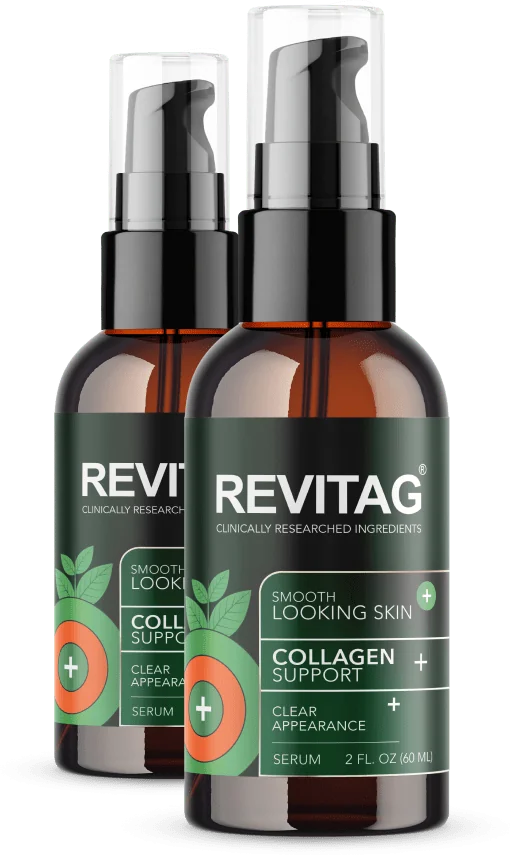
Revitag is a topical serum of soothing plant ingredients, led by colloidal oatmeal, sea buckthorn oil, epicatechin and carrot seed oil. Its maker says it supports collagen for a smoother-looking appearance. None of these ingredients has published evidence for removing skin tags, so expect calmer, softer skin around a tag rather than removal. For actual removal, a dermatologist can do it safely in one short visit.
Key points
- A gentle serum, not a corrosive remover, based on what the maker lists.
- Colloidal oatmeal and plant oils have evidence for soothing and barrier support, not for removing growths.
- The maker's idea that tangled collagen fibers cause skin tags is a simplification; tags form mainly where skin rubs.
- $49 to $69 per bottle depending on package; one bottle is a 30-day supply.
- Refunds within 60 days require returning all bottles and the packing slip, according to the maker.
Revitag is sold as “a breakthrough solution to skin tags.” Because skin tags are a physical growth, the most useful thing a review can do is separate what a serum can realistically change from what it cannot. This review uses the maker’s own description, the research behind its ingredients, and dermatology guidance on skin tags.
Revitag at a glance
| What it is | A topical serum applied to the skin |
| Maker’s claim | Helps create a smooth-looking appearance through collagen support |
| Named ingredients | Colloidal oatmeal, sea buckthorn oil, epicatechin, carrot seed oil |
| Price | $49 to $69 per bottle, depending on package (November 19, 2026) |
| Supply | 30 days per bottle |
| Guarantee | 60 days; return all bottles and the packing slip |
| What it can reasonably do | Soothe and moisturize skin, including around a tag |
| What it is not shown to do | Remove or shrink skin tags |
What the maker claims
According to the sales page, skin tags form when “collagen fibers” beneath the skin become “twisted together,” and Revitag’s formula “works to untangle and restore these fibers so you can have clear, tag-free skin.”1
It is true that skin tags contain collagen. A study the maker cites measured collagen fibers and mast cells in skin tags under the microscope.5 But describing what a tag is made of is not the same as showing that a serum can undo it. The American Academy of Dermatology (AAD) explains that skin tags develop “where skin has been rubbing against skin, jewelry, or clothing for some time,” and are linked with excess weight, pregnancy, diabetes, metabolic syndrome and family history.2 No study shows that a topical product “untangles” a tag away.
What is in Revitag?
The maker describes “an optimally dosed proprietary blend” and names four ingredients. It does not publish the full list or any amounts on its sales page.1
| Ingredient | What research supports | Shown to remove skin tags? |
|---|---|---|
| Colloidal oatmeal | Soothing, anti-itch and protective; long used for dry, irritated skin3 | No |
| Sea buckthorn oil | A plant oil studied for anti-inflammatory and barrier-repair effects4 | No |
| Epicatechin | A plant antioxidant (found in cocoa and tea) | No |
| Carrot seed oil | A fragrant plant oil | No |
Put simply, this is a soothing, moisturizing formula. That may be pleasant on skin that is irritated where a tag rubs against a collar or strap. It is not a mechanism for detaching a growth.
Is it the dangerous kind of remover?
No, based on what the maker lists. The FDA has warned against at-home mole and skin tag removal products, none of which it has approved, because they can cause skin injuries, infection, scarring and a delayed skin cancer diagnosis.6 Those products typically burn or peel tissue. Revitag’s named ingredients are gentle plant materials, so it does not appear to belong in that category. The trade-off is that a gentle serum also cannot do what those products attempt.
How much does Revitag cost?
Prices on the official page on November 19, 2026. They can change.
| Package | Supply | Total | Per bottle |
|---|---|---|---|
| 2 bottles | 60 days | $138 | $69 |
| 3 bottles | 90 days | $177 | $59 |
| 6 bottles | 180 days | $294 | $49 |
U.S. shipping is free; shipping to Canada, the UK and Ireland, and Australia and New Zealand is $15.95, according to the maker. The 6-bottle package adds two bonus ebooks.
Refund terms matter here. The maker’s 60-day guarantee asks you to return “ALL the bottles, whether they are empty or not, and the packing slip.” Keep both until the window closes.
Cost comparison worth making: a dermatologist can usually remove a skin tag in one short office visit.2 Removal for looks alone is usually not covered by insurance, so ask the clinic for a price. For one or a few tags, a single visit may cost less than several months of serum, and it actually removes the tag.
How to use it, if you buy it
The maker recommends applying a few drops to the affected area and massaging until absorbed.1
- Be sure it is a skin tag first. The AAD warns that a wart or even a skin cancer can be mistaken for a skin tag.2
- Patch test on the inner arm for a couple of days.
- Do not use it on a growth that is changing, bleeding, painful or on the eyelid; see a dermatologist instead.
- Reduce friction at the spot, since rubbing is what irritates tags and helps them form.
Who might consider it, and who should not
It might suit you if you have skin that gets irritated around a few small tags and you want a gentle, soothing product, with no expectation of removal.
Skip it if:
- your goal is to remove skin tags; see a dermatologist, who can do it safely and quickly;
- a growth is changing, bleeding, painful, or you are not sure what it is;
- you have suddenly developed many new skin tags, which the AAD says is a reason to be checked;2
- you react to fragrant plant oils.
The bottom line
Revitag is a gentle, plant-based serum with ingredients known for soothing skin, wrapped in a removal promise that its ingredients have not been shown to keep. It is not one of the harsh removers the FDA warns about, which is a point in its favor. But if you want a skin tag gone, the reliable route is the one in our skin tag removal guide: a quick visit to a dermatologist.
Common questions
Does Revitag remove skin tags?
There is no published clinical study showing that Revitag or its listed ingredients remove skin tags. The maker describes it as supporting a smooth-looking appearance through collagen support. Dermatologists remove skin tags by freezing, burning or snipping them.
What is in Revitag?
The maker names colloidal oatmeal, sea buckthorn oil, epicatechin and carrot seed oil as part of a proprietary blend. It does not publish the full ingredient list or amounts on its sales page.
Is Revitag safe?
Based on the listed ingredients it is a gentle serum rather than an acid or burning remover. Anyone can react to plant oils, so patch test first. Do not apply it to a growth that is changing, bleeding or that you are not sure is a skin tag; have it checked by a dermatologist.
How do you use Revitag?
The maker recommends applying a few drops to the affected area and massaging the serum in until it is absorbed.
How much does Revitag cost?
On November 19, 2026, the maker listed 2 bottles for $138, 3 bottles for $177 and 6 bottles for $294. Shipping is free in the U.S. and $15.95 to Canada, the UK and Ireland, and Australia and New Zealand.
How does the Revitag refund work?
The maker offers a 60-day money-back guarantee and says you must send back all the bottles, empty or not, together with the packing slip.
Sources
- Revitag official product page (maker's ingredients, claims, pricing, guarantee and FAQ), read November 19, 2026
- American Academy of Dermatology: Skin tags, why they develop and how to remove them
- Feily A, et al. Oatmeal in dermatology: a brief review. Indian J Dermatol Venereol Leprol. 2012;78(2):142-145
- Lin TK, Zhong L, Santiago JL. Anti-inflammatory and skin barrier repair effects of topical application of some plant oils. Int J Mol Sci. 2017;19(1):70
- El Safoury O, et al. Quantitation of mast cells and collagen fibers in skin tags. Indian J Dermatol. 2009;54(4):319-322
- American Academy of Dermatology: 5 reasons to see a dermatologist for mole, skin tag removal
This guide is for general information and is not medical advice. See a dermatologist or doctor for a diagnosis or before starting a treatment.