The short answer
You cannot fully remove jowls with a cream or exercises. Dermatologists rank the options by how much lift they give: skin-firming creams give subtle change at best, in-office ultrasound, radiofrequency and laser treatments give modest tightening over two to six months, and surgery such as a facelift or neck lift gives the most dramatic result.
Key points
- Jowls form when skin loses firmness and the deeper fat and muscle of the face lose volume, so tissue settles below the jawline.
- No cream can lift sagging skin, according to the American Academy of Dermatology. A good one can still make skin look smoother.
- Non-invasive treatments work best on a small amount of sagging, take months to show, and are not covered by insurance.
- In the best-known face-exercise study, cheeks looked fuller after 20 weeks, but the jawline score did not change significantly.
- A facelift averages $11,395 and a neck lift $7,885 in surgeon's fees alone, according to the American Society of Plastic Surgeons.
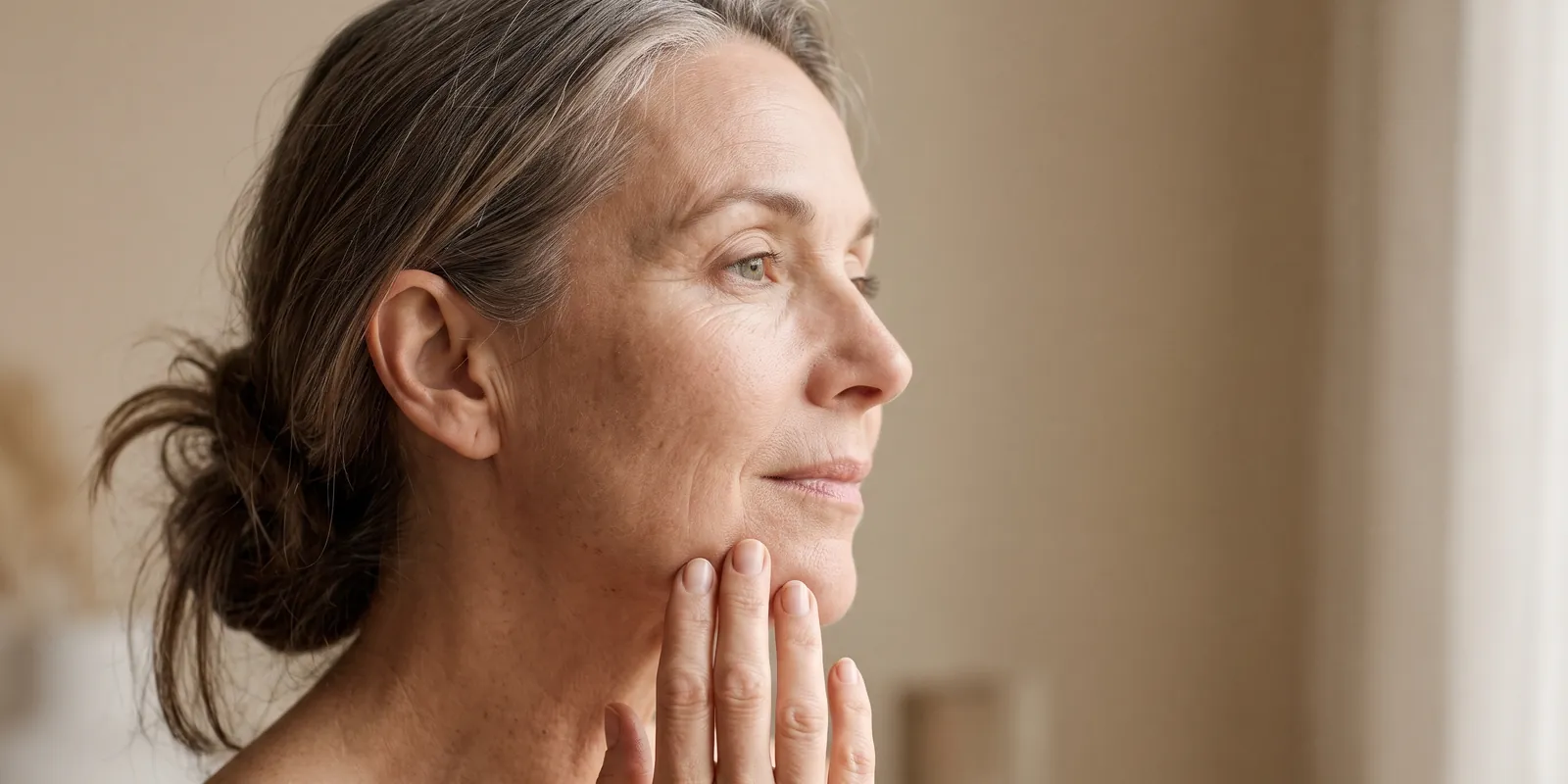
Jowls are the folds of loose skin that hang below the jawline on either side of the chin. They are a normal part of aging, not a medical problem. If they bother you, the useful question is not “what gets rid of them” but “how much change do I want, and what am I willing to spend in money, time and downtime to get it.” This guide answers that question option by option, using what dermatology and plastic-surgery bodies actually say.
What causes jowls?
Two things happen at once as the face ages.
The skin loosens. Skin stays firm because of two proteins, collagen and elastin. Your body makes less of both over time, so skin stretches more easily and springs back less.
The face loses volume underneath. Researchers now describe facial aging as including “deeper substructural volume loss of fat and muscle,” not just looser skin.3 When the cheeks lose fullness, the tissue that is left settles downward and collects along the jaw.
That is why jowls are hard to treat with one product: a cream works on the surface, while the change that creates a jowl happens in several layers.
Some habits speed the process up. The American Academy of Dermatology (AAD) names the sun as a major cause of premature skin aging and says smoking “greatly speeds up how quickly skin ages.” Repeated tanning, a diet heavy in sugar and refined carbohydrates, and alcohol are also on its list.2 Genetics matter too, which is why jowls often run in families.
First, be honest about how much sagging you have
Every option below works better on mild sagging than on advanced sagging. The AAD says you are likely to get the best results from skin tightening if you have “a small amount of sagging skin,” and warns that if you have a lot, skin tightening “may not be helpful.”1
A practical way to place yourself:
| What you see in the mirror | What that usually points to |
|---|---|
| The jawline looks a little softer than it used to, mostly in photos | Prevention, skin care, and possibly a non-invasive treatment |
| A visible fold sits just below the jaw when you look straight ahead | Non-invasive or minimally invasive tightening, after a dermatologist’s assessment |
| Loose skin hangs well below the jaw and continues into the neck | Usually a surgical consultation; tightening alone may disappoint |
This is a starting point for a conversation with a dermatologist, not a diagnosis. Faces differ, and an in-person assessment is what tells you which group you are really in.
Every option, side by side
The AAD groups non-surgical treatments by how much tightening they deliver.1 Surgical costs are from the American Society of Plastic Surgeons (ASPS).45
| Option | Expected change | Downtime | When you see results |
|---|---|---|---|
| Firming creams and serums | Subtle at best; smoother-looking skin | None | Days, only while you keep using it |
| Ultrasound (in-office) | Modest lifting and tightening | Little or none | 2 to 6 months after one treatment |
| Radiofrequency (in-office) | Some tightening right away, more later | Little or none | Best at about 6 months; can last 2 to 3 years |
| Non-wounding laser | Gradual tightening, often 3 to 5 sessions | Little or none | 2 to 6 months after the last session |
| Minimally invasive radiofrequency | More noticeable tightening | A few days; sedation; compression garment for 4 to 5 days | About 1 month, improving for up to a year |
| Laser resurfacing | Usually the strongest non-surgical tightening | 5 to 7 days at home; higher risk such as scarring | Within 2 weeks of healing |
| Facelift or neck lift | The most dramatic result | Surgical recovery | After recovery |
Non-invasive procedures are cosmetic, so insurance does not cover them, and their price varies by clinic. Ask for the full cost of the whole course, not one session.
Can a cream or serum lift jowls?
No. This is where marketing and dermatology disagree most, so here is the AAD’s wording:
As for the claim that a cream or lotion can lift sagging skin, dermatologists say that’s not possible. A cream or lotion cannot penetrate the skin deeply enough to do this.
That does not make skin care pointless. The same guidance says a good moisturizer can “plump up your skin, making fine lines and wrinkles less noticeable,” though the effect lasts only while you use it. It also says you may see a small change from a product containing a retinoid such as retinol, which can help your body make more collagen.1
So judge a serum by the right job. It can improve how the surface of your skin looks: smoother, better hydrated, with softer fine lines. It cannot move skin back up. If a product’s ads show a lifted jawline, that is the claim to ignore.
What to look for on a label if you want skin care to do its realistic best:
- A retinoid (retinol, retinal or a prescription retinoid), the ingredient type the AAD singles out for a possible small firming effect.
- A humectant such as hyaluronic acid, sodium hyaluronate or glycerin, which holds water in the skin and makes it look plumper.
- Broad-spectrum sunscreen, SPF 30 or higher, every morning. Without it, the rest of the routine is working uphill.
Do facial exercises and face yoga work for jowls?
The best-known study is a small pilot trial published in JAMA Dermatology in 2018.3 Here is what it actually did and found:
- Who: women aged 40 to 65 with mild to moderate facial volume loss. Twenty-seven enrolled; 16 finished all 20 weeks.
- What: 32 facial exercises, 30 minutes a day for 8 weeks, then every other day until week 20.
- Result: two blinded dermatologists rated the upper and lower cheeks as noticeably fuller, and the women’s estimated age dropped from about 50.8 to 48.1 years.
- What did not change significantly: the jawline score, which moved from 1.8 to 1.4 on a 0-to-4 scale, a difference the authors did not find statistically significant.
The authors list the limits themselves: a small sample, many dropouts, no comparison group, and volunteers who were keen on exercise. One co-author founded the exercise program used in the study, which the paper discloses.
So face yoga is free, safe and may make your cheeks look a bit fuller, which can soften the lower face. It is not a proven jowl treatment, and it asks for a lot of time. If you try it, think in months, and judge it by photos taken in the same light.
In-office tightening, explained simply
These are the treatments dermatologists use when you want more than skin care but not surgery.1
Ultrasound
A device sends heat deep into the skin, which prompts the body to make more collagen. Most people see modest lifting and tightening two to six months after one treatment, and some benefit from more sessions.
Radiofrequency
A device placed on the skin heats the tissue underneath. Many people feel some tightening right away, but because new collagen takes time, the best result shows at about six months. The AAD says results can last two to three years with good skin care.
Laser treatment without wounding
Some lasers heat deep layers while leaving the surface intact. Expect three to five sessions, with results appearing gradually over two to six months after the last one.
Minimally invasive radiofrequency
A thin tube or needles deliver heat exactly where it is needed. Dermatologists often use it on the neck. You are sedated, you will need someone to drive you home, and you may wear a compression garment for four or five days. Results usually show in about a month.
Laser resurfacing
The AAD calls this “the most effective procedure for tightening loose skin” without surgery. The trade-off is five to seven days at home and a greater risk of side effects such as scarring.
Who is a good candidate? The AAD lists people at a healthy, stable weight, who eat well, do not smoke, drink little alcohol, protect their skin from the sun, and have a small amount of sagging. These treatments are not right for anyone who is pregnant, has a skin infection, or takes certain medications.
When surgery is the honest answer
If the loose skin hangs well below the jaw or runs into the neck, a facelift or neck lift is the option that actually repositions tissue. The AAD is clear that even the strongest non-surgical procedures “cannot give you the results of a surgical procedure like a facelift.”1
According to the ASPS, the average surgeon’s fee is $11,395 for a facelift and $7,885 for a neck lift. Those averages leave out anesthesia, the operating room and other related expenses, so the final price is higher. The ASPS also advises that a surgeon’s experience matters as much as the cost.45
How to slow jowls from getting worse
You cannot stop aging, but you can avoid speeding it up. These are the habits the AAD recommends:2
- Protect your skin from the sun every day. Broad-spectrum, SPF 30 or higher, water-resistant, on the face, jawline and neck. Add shade, a wide-brimmed hat and sun-protective clothing when you are outdoors.
- Do not smoke. If you smoke, stopping is the biggest single change you can make for your skin.
- Skip tanning, including tanning beds and other indoor tanning.
- Cleanse gently, and wash after heavy sweating. Scrubbing irritates skin, and irritation speeds aging.
- Moisturize daily. It traps water in the skin and gives a more youthful look.
- Stop using products that sting or burn. Stinging means irritation, and irritated skin can look older. Prescription anti-aging products are the exception; tell your dermatologist if one stings.
- Eat plenty of fruit and vegetables, and drink less alcohol.
- Exercise most days. A few studies suggest moderate exercise may give skin a more youthful appearance.
These steps also make any treatment you choose later work better, because the AAD lists the same habits when it describes the best candidates for skin tightening.
Money traps to avoid
- Paying for “lift” in a jar. Creams can improve texture; they cannot lift. Spend on a retinoid and sunscreen first.
- Buying a single in-office session. Ask how many sessions the clinic expects for your face and price the whole course.
- Treating heavy sagging with a light treatment. If the sagging is advanced, the AAD warns that tightening may not help. A consultation can save you the cost of a treatment that will disappoint.
- Choosing a provider on price alone. The AAD notes that side effects are low “when performed by a board-certified dermatologist.”
When should you see a dermatologist?
See a board-certified dermatologist if you want more than a subtle change, or before you pay for any procedure. They can tell you which treatment suits your skin and how much improvement is realistic for your face. Make an appointment sooner if one side of your face changes suddenly, or you notice a new lump along the jaw or under the chin; those are not signs of ordinary aging. Small, soft growths on the neck are usually skin tags, which are harmless; our skin tag removal guide and Revitag review explain the options.
Where skin care fits in
If you have decided that a topical routine is the right level of effort for you, build it around ingredients with a track record: a retinoid, a humectant such as hyaluronic acid or glycerin, an antioxidant such as vitamin C, and a daily broad-spectrum sunscreen.
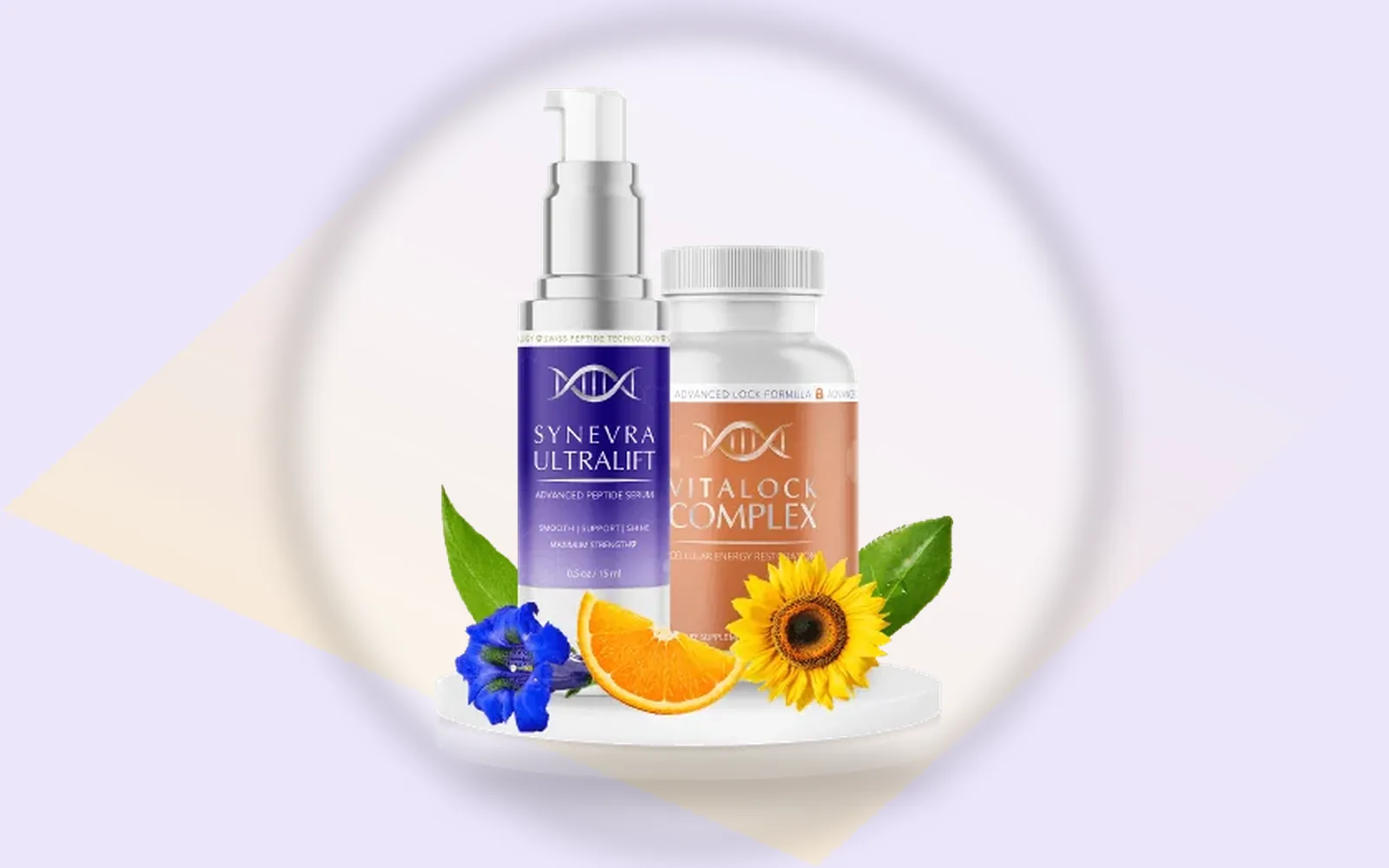
One product in this category is covered in our Synevra review, which goes through its ingredient list, its price, and what the maker does and does not claim. Read it with the limits above in mind: it is a product for how the skin’s surface looks, not for lifting a jowl.
Common questions
Can you get rid of jowls naturally?
Not completely. Daily sun protection, not smoking and a steady weight can slow further sagging, and facial exercises may add a little fullness to the cheeks, but none of them removes loose skin that has already dropped below the jawline.
At what age do jowls start?
There is no fixed age. Skin firmness and facial volume decline gradually through adulthood, and many people first notice a softer jawline in their forties or fifties. Sun exposure, smoking and genetics can bring it on earlier.
Do jowls go away with weight loss?
Sometimes they look smaller, because there is less fullness in the lower face. But losing a lot of weight can also leave skin looser. The American Academy of Dermatology notes that skin-tightening results are best in people who are at a healthy, stable weight.
What is the best non-surgical treatment for jowls?
There is no single best one. The American Academy of Dermatology describes ultrasound, radiofrequency and some lasers as giving modest lifting, and laser resurfacing as usually tightening skin better than any other non-surgical procedure, at the cost of about a week of downtime and a higher risk of side effects such as scarring.
How long do results from skin tightening last?
It depends on the treatment. The American Academy of Dermatology notes that results from radiofrequency can last two to three years with good skin care, and that skin keeps aging afterward, so some people repeat treatments.
Does face yoga work for jowls?
The evidence is weak for jowls specifically. In a 2018 JAMA Dermatology pilot study, women who completed 20 weeks of facial exercises had fuller upper and lower cheeks and were judged to look younger, but the jawline score did not improve significantly and only 16 of 27 participants finished.
How much does a facelift for jowls cost?
The American Society of Plastic Surgeons puts the average surgeon's fee for a facelift at $11,395 and for a neck lift at $7,885. Those averages do not include anesthesia, the operating room or other related expenses, so the total is higher.
Sources
- American Academy of Dermatology: Many ways to firm sagging skin
- American Academy of Dermatology: 11 ways to reduce premature skin aging
- Alam M, et al. Association of Facial Exercise With the Appearance of Aging. JAMA Dermatology. 2018;154(3):365-367
- American Society of Plastic Surgeons: How much does a facelift cost?
- American Society of Plastic Surgeons: How much does a neck lift cost?
This guide is for general information and is not medical advice. See a dermatologist or doctor for a diagnosis or before starting a treatment.