The short answer
Most brittle nails improve when you cut down their contact with water and detergents, moisturize nails and cuticles daily, keep them short and avoid harsh manicures. Supplements help some people: biotin has small studies behind it, while iron and zinc help mainly if you are low in them. Because a nail takes months to grow out, give any change at least three to six months.
Key points
- Brittle nails affect up to 1 in 5 people, most often women over 50, and fingernails more than toenails.
- Repeated wetting and drying, detergents and nail trauma are among the most common causes.
- Nail moisturizers with occlusives and humectants, and some nail strengtheners, have research behind them.
- Biotin is usually suggested at 5 to 10 mg a day for 3 to 6 months, but studies are small, and high doses can distort lab tests.
- A dark streak, a lifting nail, pitting or spoon-shaped nails are reasons to see a dermatologist.
Nails that split, peel in layers or snap at the slightest knock are one of the most common nail complaints. They are rarely serious, but they are stubborn, because the nail you see today was made months ago. This guide explains what is going on, the habits and products with real evidence behind them, what supplements can and cannot do, and the changes that deserve a doctor’s look.
What counts as a brittle nail?
Doctors call it nail fragility. A review by an international panel of nail specialists describes brittle nails as nails that “split, flake and crumble, become soft and lose elasticity,” and estimates that the problem affects up to 20% of people, especially women over 50. Fingernails are affected more often than toenails.1
The two most common patterns:
| Pattern | Medical name | What it looks like |
|---|---|---|
| Peeling in layers at the tip | Onychoschizia | The free edge splits horizontally, like pages of a book |
| Splitting and ridges along the length | Onychorrhexis | Long ridges and cracks that run from the cuticle toward the tip |
Why nails become brittle
The same review splits brittle nails into two groups:1
- Idiopathic, or “brittle nail syndrome,” where no single cause is found. This is the most common situation. Changes in the nail’s lipids and moisture with age are thought to play a part; the review notes that cholesterol sulfate in the nail falls with age, especially after menopause.
- Secondary brittle nails, caused by something specific:
- repeated wetting and drying, and contact with water and detergents;
- trauma, including aggressive manicures and using nails as tools;
- nail conditions such as psoriasis or fungal infection;
- systemic causes, including iron or zinc deficiency and other health conditions.
If your nails changed suddenly, or the problem came with fatigue, hair loss or other symptoms, it is worth looking for a secondary cause with your doctor. Thick, yellow or crumbling nails, especially toenails, often point to fungus instead; our toenail fungus treatment guide covers how to confirm and treat it.
What helps: the daily habits
For secondary brittle nails, the specialists’ review recommends treating the underlying condition, avoiding trauma and irritants, “limiting contact with water and detergents, and regular use of emollients.”1 In practice:
- Wear gloves for washing up and cleaning. Cotton-lined rubber gloves keep hands dry and protect from detergents.
- Moisturize nails and cuticles after every hand wash, and before bed. Massage it into the nail plate, not just the skin.
- Keep nails short, with a gently rounded edge, so there is less leverage to split them.
- File in one direction with a fine file rather than sawing back and forth, and smooth the edge after any chip.
- Do not use nails as tools to open cans, scrape labels or pry things.
- Go easy on manicures. Avoid cutting cuticles, aggressive buffing and frequent removal of long-wear polish.
These habits are free and they target the most common causes. They are the foundation; everything below works better on top of them.
Products with research behind them
Nail moisturizers
The review describes nail moisturizers as useful for brittle nails. The best contain occlusives such as petrolatum or lanolin, which seal water in, and humectants such as glycerin, which draw water into the nail. Alpha-hydroxy acids or urea may be added to help the nail hold water.1 A thick hand cream with petrolatum and urea, massaged into the nails, follows the same principle. Plant-oil nail products, such as the one in our Kerassentials review, work mainly as moisturizers for the nail and cuticle.
Nail strengtheners and lacquers
Several lacquers are sold to restructure fragile nails. The review highlights research on two types: a strengthener with silanediol salicylate, plant gum and hyaluronic acid, supported by a six-month study, and a hydroxypropyl chitosan lacquer shown to protect nails from physical damage and improve their structure.1 Look for products made specifically for brittle or peeling nails.
Do supplements help brittle nails?
This is where marketing runs furthest ahead of the evidence. Here is what the specialists’ review and the underlying studies say.1
| Supplement | Evidence for brittle nails | Notes |
|---|---|---|
| Biotin | Several small studies show firmer, harder nails | Usually suggested at 5 to 10 mg a day for 3 to 6 months; affects some lab tests |
| Iron (with vitamin C) | May be very effective when iron is truly low | Check ferritin first; the link is rarely reported in studies |
| Zinc | Helpful when zinc is deficient | Long courses of 20 to 30 mg a day reported |
| Collagen peptides | One open-label study: nail growth up 12%, broken nails down 42% after 24 weeks | No comparison group |
| Combined “biomineral” formulas | One randomized trial found stronger, smoother nails after 3 months | Doses of each ingredient were not reported |
| Cysteine (amino acid) | Reported as useful in idiopathic brittle nails | Small studies |
Biotin, in more detail
Biotin is the supplement most often recommended for nails. In a retrospective review of a nail clinic’s patients, 22 of 35 people (63%) who took daily biotin improved, and 37% saw no change.2 The specialists’ review notes that the biotin studies “were small, not well controlled,” and a separate review concluded there is a lack of evidence for biotin in healthy people who are not deficient.13
The safety point most people miss: high biotin intake can cause falsely high or falsely low results on certain lab tests, including tests for heart attacks (troponin), thyroid function, and pregnancy. The FDA has warned that this interference “may go undetected.”4 If you take biotin, tell your doctor and the lab before any blood test. Biotin also turns up in beauty supplements that are not sold for nails, such as the capsule covered in our Synevra review, so check every label you take.
A sensible approach: fix the habits first, check iron and zinc if your doctor agrees, and if you try biotin, give it three to six months and photograph your nails at the start.
When brittle nails need a doctor
Some nail changes are not simple brittleness. The American Academy of Dermatology (AAD) lists changes a dermatologist should examine, including:5
- A new or changing dark streak in a nail, which could be melanoma.
- A nail lifting away from the skin, often from fungus, psoriasis or injury.
- Redness and swelling around a nail, a sign of infection.
- Pitting, small dents that can come with psoriasis, eczema or alopecia areata.
- Yellow, thick nails that seem to stop growing, which can be linked to lung disease, rheumatoid arthritis or serious infection.
- Deep grooves across the nail (Beau’s lines), after illness, fever, injury or major stress.
- Thin, spoon-shaped nails, which can be a sign of iron deficiency.
A review of common nail disorders adds that nail changes can sometimes be “a clue to an underlying systemic disease or infection,” so they are worth mentioning at any medical visit.6
A realistic timeline
Nails grow slowly, and any improvement shows up first at the base. As a rough guide:
- Weeks 1 to 4: fewer new chips and splits if you protect your hands, but the old nail still looks the same.
- Months 2 to 3: a stronger band of nail starts to show near the cuticle.
- Months 4 to 6: the stronger nail reaches the tip; this is the point to judge a supplement or product.
Where nail supplements fit
If the habits above are in place and you want to try a supplement, choose one built around the nutrients with the most support for nails, such as biotin, or iron and zinc if you are low, and judge it after several months.
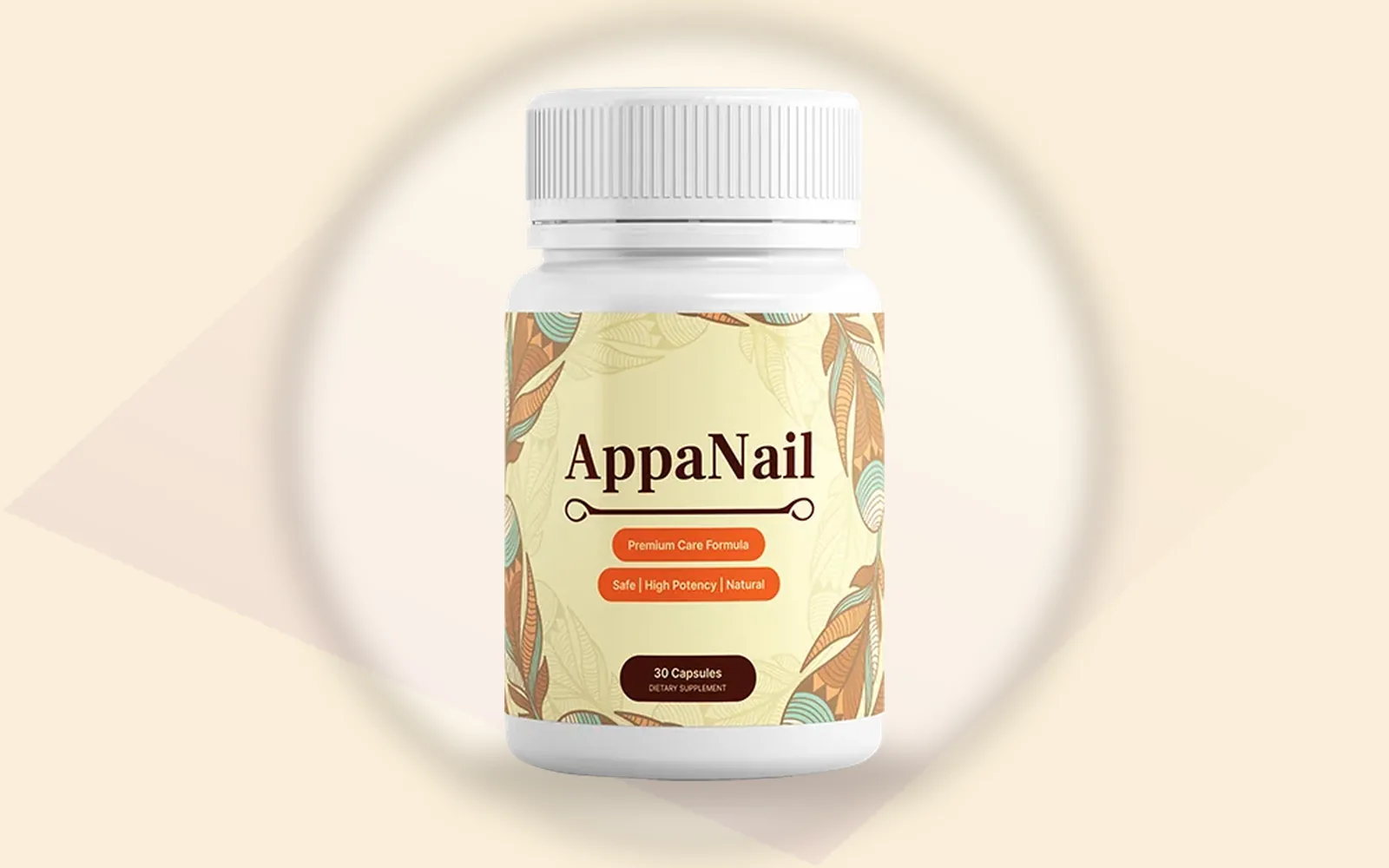
One nail and foot supplement is reviewed in detail in our AppaNail review, which compares its ingredient list with the research in this guide.
Common questions
Why are my nails suddenly so brittle?
Common reasons include more hand-washing or cleaning, new detergents or hand sanitizers, a harsher manicure routine, cold dry weather and aging. Brittle nails can also come from nail conditions such as psoriasis or fungus, low iron, or other health problems, so see a doctor if the change is sudden or comes with other symptoms.
Does biotin really help brittle nails?
It may help some people. Small studies found firmer, thicker nails with biotin, and in one retrospective review 63% of 35 people improved. The studies were small and not well controlled. A typical suggested dose is 5 to 10 mg a day for 3 to 6 months, and you should tell your doctor before any blood test because biotin can distort results.
What vitamin deficiency causes brittle nails?
Iron deficiency is a known cause; very low iron can make nails thin and spoon-shaped. Zinc deficiency can also cause fragile nails. A blood test can check your levels before you take supplements.
How long does it take to fix brittle nails?
Several months. A fingernail has to grow out fully for a new, stronger nail to replace the damaged one, so most treatments are judged after three to six months of steady use.
Do nail hardeners work?
Some can help by protecting and restructuring the nail surface; research supports specific formulas such as those with hydroxypropyl chitosan. Choose products designed for brittle or peeling nails, keep nails short, and give any product several months.
Are brittle nails a sign of a disease?
Usually not, but sometimes. Brittle nails can come with low iron or zinc, psoriasis, fungal infection and other health conditions. If brittleness is new, affects many nails, or comes with fatigue, hair loss or other changes, see a doctor.
Sources
- Chessa MA, et al. Pathogenesis, Clinical Signs and Treatment Recommendations in Brittle Nails: A Review. Dermatol Ther. 2020;10(1):15-27
- Hochman LG, Scher RK, Meyerson MS. Brittle nails: response to daily biotin supplementation. Cutis. 1993;51(4):303-305
- Patel DP, et al. A Review of the Use of Biotin for Hair Loss. Skin Appendage Disord. 2017;3(3):166-169
- U.S. FDA: Biotin interference with troponin lab tests
- American Academy of Dermatology: 12 nail changes a dermatologist should examine
- Lee DK, Lipner SR. Optimal diagnosis and management of common nail disorders. Ann Med. 2022;54(1):694-712
This guide is for general information and is not medical advice. See a dermatologist or doctor for a diagnosis or before starting a treatment.